Cricket is famous for fast bowlers who send the ball racing towards batters at more than 150 km/h. But what happens when a delivery travels at an incredibly low speed? Surprisingly, even experienced international batters can struggle to judge its flight, spin and timing. New Zealand spinner Leigh Kasperek attracted attention in 2021 when her deliveries against Australia were reported to have travelled at speeds as low as 38 km/h.
So, who bowled the slowest ball in cricket history? Kasperek is widely associated with this remarkable speed, but it should not be presented as an officially confirmed world record. Her performance demonstrated how flight, spin and changes in pace can challenge even the world’s best batters. Meanwhile, famous slower deliveries from Jasprit Bumrah and Steve Harmison show why bowling slower can sometimes be just as effective as bowling fast.
Slowest Reported Delivery and Famous Slower Balls in Cricket

| Bowler | Country | Opponent | Year | Reported speed or key achievement |
| Leigh Kasperek | New Zealand | Australia | 2021 | Deliveries reported at speeds as low as 38 km/h |
| Jasprit Bumrah | India | Australia | 2018 | A 111 km/h slower delivery dismissed Shaun Marsh |
| Steve Harmison | England | Australia | 2005 | A deceptive slower ball bowled Michael Clarke on the final delivery of day three |
Who Bowled the Slowest Ball in Cricket History?
New Zealand spinner Leigh Kasperek is widely associated with one of the slowest reported deliveries in international cricket. During the 2021 ODI series against Australia, her exceptionally slow spin bowling attracted attention, with deliveries reportedly travelling at speeds as low as 38 km/h.
Kasperek’s impact extended beyond the speed of individual deliveries. She took 6 wickets for 46 runs in the second ODI and followed that performance with 3 wickets for 24 runs in the third and final ODI of the 2021 series against Australia. Her performances highlighted how changes in pace, flight and spin could trouble Australia’s batters.
However, cricket does not have a universally recognised, officially ratified record covering the slowest delivery across every format and level of the game. Therefore, the 38 km/h figure is best described as a reported delivery speed rather than a confirmed world record.
One important detail makes this story even more interesting: the widely discussed 38 km/h delivery to Australian batter Beth Mooney was not a wicket-taking ball. Mooney reached out and worked it towards long-off for a single. Kasperek’s achievement was about the effectiveness of her overall spell, not just one delivery.
Why Was Leigh Kasperek’s Bowling So Effective?
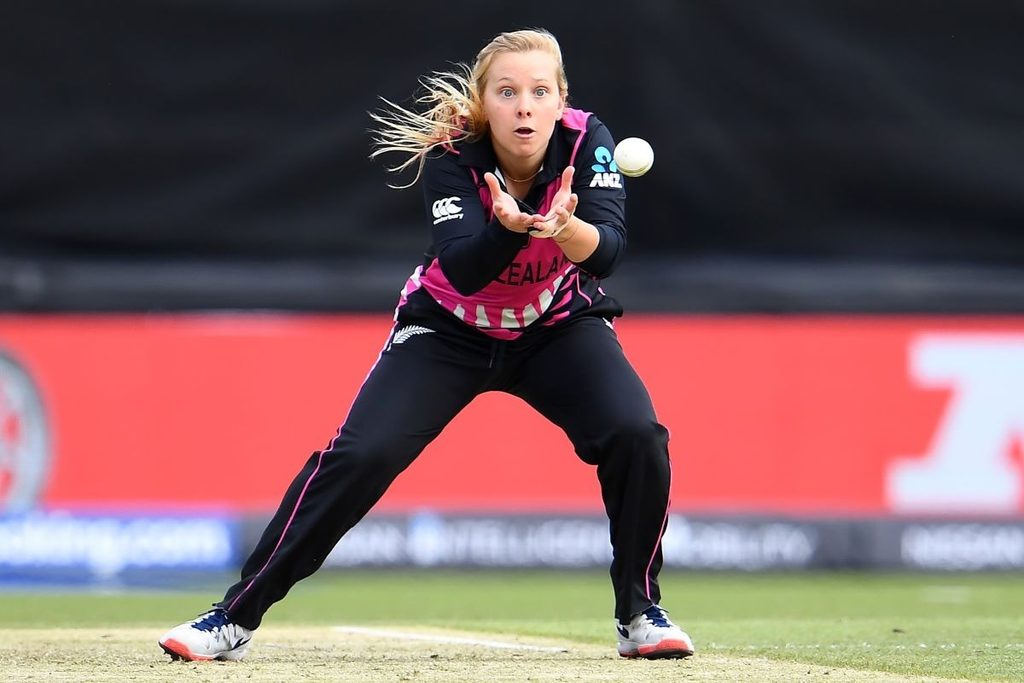
Kasperek’s success was not simply about delivering the ball slowly. She combined changes in pace with flight, spin and conditions that made it difficult for Australia’s batters to settle into a rhythm.
1. The Ball Stayed in the Air Longer
A slow delivery can give a batter more time to watch the ball, but that does not automatically make it easier to hit. The batter must judge how much the ball will dip, where it will land and how much it will turn.
If the batter commits to a shot too early, the delivery may arrive later than expected, leading to a mistimed stroke.
2. The Wind Affected the Flight
Australia captain Meg Lanning discussed the challenge posed by Kasperek’s ultra-slow bowling into a stiff breeze at Tauranga’s Bay Oval. The conditions added another dimension to the flight of the ball and made it harder for Australia’s batters to judge their shots.
This example shows that bowling conditions, release and trajectory can matter as much as the speed displayed on a broadcast graphic.
3. Batters Struggled to Judge the Timing
Aggressive batters often begin their movements before the ball reaches them. When a delivery arrives much more slowly than expected, their timing can be disrupted.
Kasperek demonstrated that a bowler does not always need high speed to create pressure. Accuracy, flight, spin and an understanding of the batter’s expectations can be just as important.
Memorable Slower Balls in Cricket History
The slowest reported delivery is only one part of cricket’s slower-ball story. Several memorable dismissals demonstrate how a change of pace can deceive a batter at a crucial moment.
The following examples focus on notable deliveries with identifiable match context rather than attempting to rank every slower ball in cricket history.
Jasprit Bumrah Against Australia in 2018
Jasprit Bumrah produced a memorable slower delivery to dismiss Australian batter Shaun Marsh during the Boxing Day Test at the Melbourne Cricket Ground on 28 December 2018. The delivery was clocked at 111 km/h after Bumrah had bowled several deliveries in the 140 km/h range.
The wicket came on the final ball before lunch on day three. Bumrah later revealed that Rohit Sharma, who was stationed at mid-off, had suggested trying a slower ball similar to the one Bumrah used in limited-overs cricket. Bumrah followed the advice, delivering a dipping ball that trapped Marsh LBW. The moment highlighted how tactical awareness and a well-disguised change of pace can produce a crucial wicket even in Test cricket.
The delivery was effective because it differed considerably from the pace Marsh had faced earlier in the over. Bumrah’s execution and the element of surprise turned a tactical suggestion into a memorable wicket.
Steve Harmison Against Australia in 2005
During the famous 2005 Ashes series at Edgbaston, England fast bowler Steve Harmison bowled Australian batter Michael Clarke with a deceptive slower ball on the final delivery of day three. ESPNcricinfo’s technical analysis describes the delivery as a split-fingered legcutter.
Clarke had scored 30 and shared a 38-run partnership with Shane Warne. He failed to read Harmison’s change of pace, and the ball struck the stumps, leaving Australia at 175 for 8, still needing 107 runs to win.
Harmison later joked that his teammates had considered his slower ball the worst in the game. On this occasion, however, it worked perfectly. England eventually won the Test by two runs.
What Is the Difference Between a Slow Ball and a Slower Ball?
Although these expressions sound similar, they describe different things in cricket.
A slow ball generally refers to a delivery travelling at a low speed. Spinners routinely bowl more slowly than fast bowlers because they rely on flight, spin and changes in trajectory rather than extreme pace.
A slower ball is usually a variation used by a fast or medium-pace bowler. The bowler deliberately reduces the delivery’s speed compared with their normal deliveries while attempting to disguise the change.
For example, a spinner bowling at 60 km/h may be delivering a normal ball for their style. A fast bowler who usually bowls at 140 km/h might deliver a slower ball at 110 km/h to surprise the batter.
This distinction matters when discussing the slowest ball in cricket history. A naturally slow spin delivery should not automatically be compared with a fast bowler’s deliberate change of pace.
How Do Bowlers Bowl a Slower Ball?
Fast bowlers use different techniques to reduce pace while trying to prevent batters from identifying the variation too early.
Back-of-the-Hand Delivery
The bowler releases the ball using a different hand position, often with the back of the hand facing the batter. The altered release can reduce pace and change the trajectory. Skilled bowlers disguise the variation to make it harder to recognise.
Off Cutter
An off cutter is delivered with finger pressure that creates cutting movement off the pitch. The exact direction and amount of movement depend on the bowler’s action, release and the pitch conditions. Combined with reduced pace, the variation can make the ball difficult to time.
Leg Cutter
A leg cutter uses a different finger position to create cutting movement in the opposite direction to an off cutter. When combined with reduced pace, it can encourage a batter to misjudge the line or play a mistimed shot.
Reduced Pace with a Similar Action
Some bowlers focus on maintaining a familiar bowling action while changing their grip and release. This makes the variation harder to detect before the ball leaves the hand.
The objective is not simply to bowl slowly. It is to make the batter expect one speed and receive another.
Why Are Slower Balls Important in Modern Cricket?
Slower balls are particularly useful in limited-overs cricket, where batters frequently look to score quickly. A batter expecting a fast delivery may begin a shot too early and lose control when the ball arrives later than anticipated.
In T20 cricket, bowlers often use slower balls to defend a total during the final overs. In ODI cricket, changes of pace can interrupt partnerships and prevent batters from maintaining their scoring rhythm.
Even in Test cricket, a slower ball can create a wicket when a batter has settled into a predictable rhythm. Harmison’s dismissal of Clarke is a famous example of how a well-timed variation can change the direction of a match.
Successful slower bowling requires more than a low speed reading. Accuracy, deception, control and an understanding of the batter’s intentions are all essential.
Conclusion
Leigh Kasperek is widely associated with one of the slowest reported deliveries in international cricket, with balls against Australia in 2021 reportedly travelling at speeds as low as 38 km/h. However, this figure should not be described as an officially confirmed world record.
Her performances demonstrated that extremely slow spin bowling can challenge even experienced international batters. The famous slower deliveries from Jasprit Bumrah and Steve Harmison also show how a sudden change of pace can create a decisive moment.
Ultimately, cricket rewards more than raw speed. Flight, spin, accuracy and deception can be just as important as pace. Sometimes, the most effective delivery is not the fastest one, but the one the batter least expects.
Frequently Asked Questions
New Zealand spinner Leigh Kasperek is widely associated with a delivery reported at 38 km/h against Australia in 2021. However, this speed is not an officially ratified world record.
Leigh Kasperek of New Zealand was reported to have bowled deliveries at speeds as low as 38 km/h during the 2021 ODI series against Australia.
No. Leigh Kasperek is a spin bowler who uses flight, spin and changes in pace rather than extreme speed to challenge batters.
A slow ball travels at a low speed and is often a normal part of a spinner’s style. A slower ball is a deliberate variation used by a pace bowler to deceive a batter.
Fast bowlers use slower balls to disrupt a batter’s timing, encourage mistimed shots and create wicket-taking opportunities, particularly in limited-overs cricket.
Bumrah’s delivery to Shaun Marsh was clocked at 111 km/h during the Boxing Day Test at the MCG on 28 December 2018. It dismissed Marsh LBW just before lunch on day three. Rohit Sharma had suggested trying a slower ball.
Steve Harmison bowled Australian batter Michael Clarke with a deceptive slower ball on the final delivery of day three of the 2005 Ashes Test at Edgbaston. Australia finished the day at 175 for 8, needing another 107 runs to win. England eventually won the match by two runs.